+86 13332949210
 info@xihobattery.com







 Xiho
Xiho Mar 31 2026
The International Energy Agency is keeping a close watch on developments in the Middle East, particularly regarding the risks of extended interruptions to energy shipments passing through the Strait of Hormuz.
Although upstream oil production sites have seen limited direct impact from recent events, the disruption to maritime oil traffic via the Strait has compelled some producers to begin curtailing output. The region's production of refined petroleum products and liquefied natural gas has also been substantially affected. The IEA remains engaged in evaluating the energy security consequences in collaboration with international governments.
Since the escalation of conflict, prices for oil and natural gas have surged sharply. Brent crude futures increased by 17% through early March, while Europe's TTF natural gas benchmark rose over 60%. Certain refined product markets, including diesel and jet fuel, have been especially strained.
The worldwide oil market entered a state of considerable surplus at the beginning of 2025. Prior to the military actions starting February 28, supply was already projected to significantly outpace demand through 2026. However, protracted supply interruptions could reverse this surplus into a deficit.
Global observed oil inventories climbed to over 8.2 billion barrels in 2025, reaching their highest point since 2021. These stockpiles now offer a valuable buffer against supply shocks. IEA member nations collectively hold more than 1.2 billion barrels of public emergency oil reserves, with an additional 600 million barrels of industry stocks under government mandate available if required.
Natural gas markets had been moving toward balance following the major disruption caused by Russia's 2022 invasion of Ukraine. A significant wave of new LNG export capacity coming online by 2030 is anticipated to alter market dynamics. Nonetheless, markets stayed tight in early 2026, and low storage levels following the Northern Hemisphere winter are expected to increase demand for LNG in coming months.
A prolonged shutdown of Qatar's Ras Laffan facility—the world's largest LNG plant—could intensify this tightness significantly. The facility, attacked on March 2, 2026, produced 112 bcm of LNG in 2025, along with substantial volumes of LPG and condensate.
The Gulf is a vital global exporter of oil products, particularly middle distillates like diesel and jet fuel. Global markets for these distillates have been relatively tight, with steady European imports being a key factor. There is limited capacity for refineries worldwide to further increase diesel and jet fuel output to offset sustained supply losses.
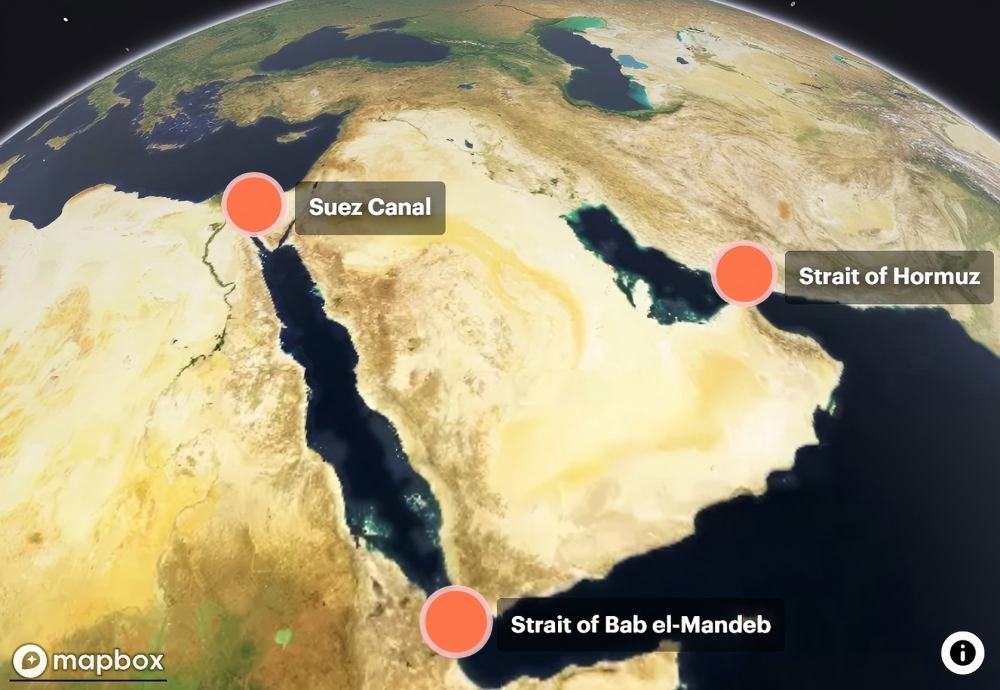
The Strait of Hormuz is a critical maritime chokepoint. An average of 20 million barrels per day of crude and products transited the Strait in 2025, representing about 25% of global seaborne oil trade. Extended blockage would cause major supply disruptions. Alternative routes are scarce; only Saudi Arabia and the UAE have operational pipelines that could bypass the Strait, with estimated capacity between 3.5 and 5.5 mb/d. Other regional producers are almost entirely dependent on the Strait for exports.
Approximately 80% of the oil moving through the Strait in 2025 was headed for Asia. However, a lengthy disruption would have worldwide effects due to price impacts and potential physical shortages. It could also effectively remove most of the world's spare oil production capacity, predominantly held by Saudi Arabia.
Furthermore, over 110 bcm of LNG passed through the Strait in 2025. Around 93% of Qatar's and 96% of the UAE's LNG exports transit this route, accounting for nearly one-fifth of global LNG trade. No alternative routes exist for these volumes. While nearly 90% of this LNG is destined for Asia, extended disruptions would have global consequences, forcing contract holders to the spot market and driving up prices worldwide.
WhatsApp/Wechat/Mobile: +86 13332949210
Email: info@xihobattery.com
Website: www.xihopower.com