+86 13332949210
 info@xihobattery.com







 Xiho
Xiho Dec 03 2025
Recently, Nicholas Bellini, Senior Key Account Manager and Battery Expert at TÜV SÜD, a German provider of solutions for safety, security, and sustainable development, stated that it has been one year since the initial steps of the EU Battery Regulation came into effect, and its impact is already being felt.
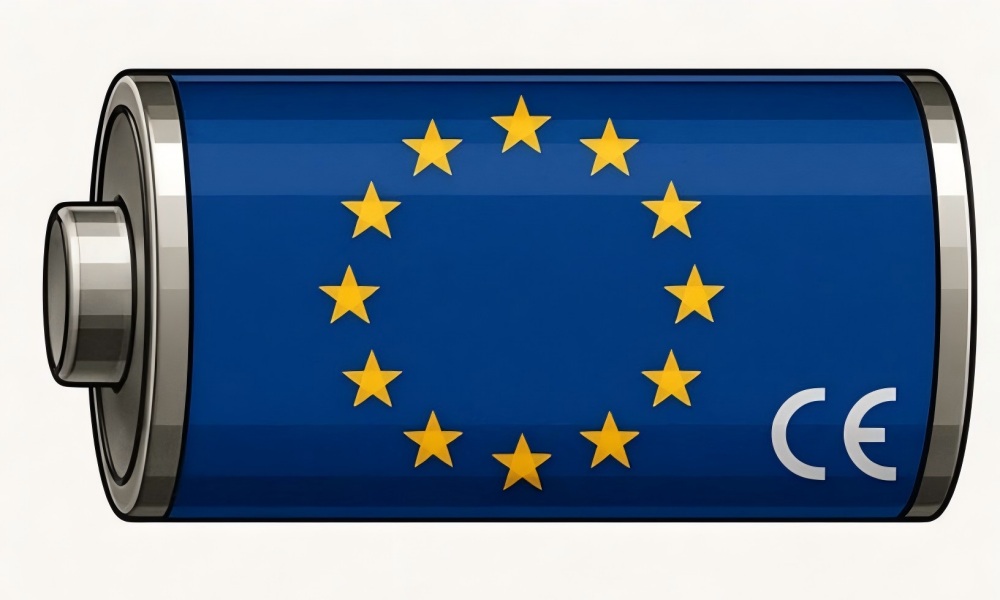
The mandatory CE marking and conformity assessment procedures have been in effect since August 18, 2024. To be sold on the EU market, batteries must now bear the CE mark.
The EU Battery Regulation aims to strengthen the sustainability, transparency, and safety of batteries throughout their entire life cycle. However, for many market participants, the regulation has brought not clear guidance but considerable uncertainty and practical implementation challenges.
Despite its clear intent, the first year of implementation has shown that translating political intent into operational reality is not straightforward. The core question now is not whatregulations to comply with, but howto integrate compliance requirements without hindering product development, testing, and risk management, while also not slowing down the urgently needed innovation and deployment pace of energy storage capacity.
In this context, battery energy storage systems (BESS) play a particularly critical role: their complex system integration, longer operational lifespans, diverse application scenarios (e.g., grid stabilization, second use), and often customer-specific designs make compliance significantly more challenging compared to other energy storage technologies.
To better understand the regulation's structure, it can be divided into four main thematic areas: CE marking, Battery Passport, Due Diligence obligations, and Waste Battery Management.
This article focuses on the CE marking obligations to highlight the special position of BESS within the overall framework.
The EU Battery Regulation aims to strengthen the sustainability, transparency, and safety of batteries throughout their entire life cycle. However, for many market participants, the regulation has brought not clear guidance but considerable uncertainty and practical implementation challenges.
Despite its clear intent, the first year of implementation has shown that translating political intent into operational reality is not straightforward. The core question now is not whatregulations to comply with, but howto integrate compliance requirements without hindering product development, testing, and risk management, while also not slowing down the urgently needed innovation and deployment pace of energy storage capacity.
In this context, battery energy storage systems (BESS) play a particularly critical role: their complex system integration, longer operational lifespans, diverse application scenarios (e.g., grid stabilization, second use), and often customer-specific designs make compliance significantly more challenging compared to other energy storage technologies.
To better understand the regulation's structure, it can be divided into four main thematic areas: CE marking, Battery Passport, Due Diligence obligations, and Waste Battery Management.
This article focuses on the CE marking obligations to highlight the special position of BESS within the overall framework.
Reviewing the First Year's Challenges
One year after the EU Battery Regulation came into force, it has revealed both advantages and growing pains. Although the intention to harmonize standards across Europe is commendable, differing interpretations among European countries and a lack of unified guidance have created friction in practice, slowing investment decisions and the pace of innovation, particularly for stationary storage systems.
The battery storage industry now needs a pragmatic, cooperative approach: regulators, notified bodies, and manufacturers must work together to develop joint frameworks and standardized testing standards. From TÜV SÜD's perspective, such cooperation is crucial not only for market access but also for building trust and comparability during rapid expansion. TÜV SÜD found that many companies faced a series of initial challenges last year, detailed as follows:
•Companies were unaware of the regulatory legislation.
•Significant difficulties existed in understanding and structuring the regulations to fit operational processes.
•Differing interpretations due to varying responsibilities across European countries.
•Ambiguous terminology, creating legal uncertainty.
•Overlap with other EU legislation (REACH, WEEE, MDR, IfSG, etc.), which significantly increased coordination efforts.
These early obstacles forced many stakeholders to invest resources in clarifying roles, defining terminology, and establishing the most basic documentation workflows before even tackling technical implementation.
For many companies, ecological goals temporarily took a back seat to the core question: How can the conformity assessment be passed correctly and without errors?
The battery storage industry now needs a pragmatic, cooperative approach: regulators, notified bodies, and manufacturers must work together to develop joint frameworks and standardized testing standards. From TÜV SÜD's perspective, such cooperation is crucial not only for market access but also for building trust and comparability during rapid expansion. TÜV SÜD found that many companies faced a series of initial challenges last year, detailed as follows:
•Companies were unaware of the regulatory legislation.
•Significant difficulties existed in understanding and structuring the regulations to fit operational processes.
•Differing interpretations due to varying responsibilities across European countries.
•Ambiguous terminology, creating legal uncertainty.
•Overlap with other EU legislation (REACH, WEEE, MDR, IfSG, etc.), which significantly increased coordination efforts.
These early obstacles forced many stakeholders to invest resources in clarifying roles, defining terminology, and establishing the most basic documentation workflows before even tackling technical implementation.
For many companies, ecological goals temporarily took a back seat to the core question: How can the conformity assessment be passed correctly and without errors?
CE Marking Concise Guide – Quick Checklist
Depending on the battery category and operator role, different regulatory articles (Articles 6-10, 12-14) must be complied with to ensure CE conformity.
Here are some proven methods for structuring and preparing for compliance:
1. Define Roles: Manufacturer, Producer, Importer, or Distributor.
2. Define Battery Category: Electric Vehicle, Light Means of Transport, Industrial (including stationary energy storage systems), Portable, Starting, Lighting, and Ignition (SLI). Note: Batteries for BESS are typically classified as a sub-category of Industrial batteries.
3. Check which articles are in effect: a) Currently in effect: Articles 6, 9, 10, 13, 14; b) Not yet in effect: Articles 7, 8.
4. Identify relevant articles based on role and category.
5. Technical Documentation and Declaration of Conformity: Includes test reports, risk analysis, etc.
6. Affix the CE marking on the battery.
Here are some proven methods for structuring and preparing for compliance:
1. Define Roles: Manufacturer, Producer, Importer, or Distributor.
2. Define Battery Category: Electric Vehicle, Light Means of Transport, Industrial (including stationary energy storage systems), Portable, Starting, Lighting, and Ignition (SLI). Note: Batteries for BESS are typically classified as a sub-category of Industrial batteries.
3. Check which articles are in effect: a) Currently in effect: Articles 6, 9, 10, 13, 14; b) Not yet in effect: Articles 7, 8.
4. Identify relevant articles based on role and category.
5. Technical Documentation and Declaration of Conformity: Includes test reports, risk analysis, etc.
6. Affix the CE marking on the battery.
Future Tasks:
1. Monitor upcoming articles: Especially Article 7 (Carbon Footprint rules).
2. Engage with a notified body early to assess third-party verification needs (Module D1 or Module G).
2. Engage with a notified body early to assess third-party verification needs (Module D1 or Module G).
Critical Transition Phase: Notified Bodies and Article 7
To date, only a draft version for calculating the carbon footprint of electric vehicle batteries has been published. Once Article 7 is formally published for specific categories, manufacturers will have a one-year transition period to achieve compliance, facilitated through a notified body.
Article 7 currently stipulates broad obligations, including life cycle modeling, energy mix reporting, recalculation rules, and performance classes. These obligations are technically demanding and require significant adjustments to data and process management, such as energy source verification, supply chain data, and facility parameters.
These complex requirements, combined with limited testing capacity, make Article 7 one of the most significant sources of uncertainty for the BESS industry.
Article 7 currently stipulates broad obligations, including life cycle modeling, energy mix reporting, recalculation rules, and performance classes. These obligations are technically demanding and require significant adjustments to data and process management, such as energy source verification, supply chain data, and facility parameters.
These complex requirements, combined with limited testing capacity, make Article 7 one of the most significant sources of uncertainty for the BESS industry.
Specific Challenges for BESS: Articles 12, 14, and Second-Use Batteries
While Article 7 sets the overarching framework for carbon footprint compliance, BESS face additional requirements due to their operational and safety characteristics compared to standard industrial batteries.
In addition to the CE marking obligations and related requirements for industrial batteries with a capacity exceeding 2 kWh (Articles 6, 7, 8, 10, 13), BESS must also comply with:
•Article 14 – Information on state of charge and expected service life.
•Article 12 – Safety of stationary battery energy storage systems.
Furthermore, the frequent use of second-use batteries in stationary storage systems subjects this application to additional articles of the EU Battery Regulation, thereby increasing regulatory complexity and aspects to consider.
The required risk analysis as part of the technical documentation is also often more extensive than for other battery types, due to key factors such as high energy/power density, stationary installation within buildings, and complex system integration.
Besides the CE marking obligations for industrial batteries exceeding 2 kWh (Articles 6, 7, 8, 10, 13), the manufacturer (i.e., the party bearing CE responsibility) also faces these additional obligations:
•Article 12 – Safety of stationary BESS: Requires evidence of conformity with Annex V safety tests based on the latest methods.
•Article 14 – State of charge and expected service life information: Requires providing State of Charge (SoC) data, expected lifetime, and software reset options.
Second-use batteries: Comprehensive functional health check; traceability; documentation; conformity assessment; inclusion in the digital battery passport; extended producer responsibility.
Risk Analysis: Should be included in the technical documentation and address operational, integration, and safety risks as described in Article 5.2. The required evidence in this context is based on tests and corresponding test reports.
In addition to the CE marking obligations and related requirements for industrial batteries with a capacity exceeding 2 kWh (Articles 6, 7, 8, 10, 13), BESS must also comply with:
•Article 14 – Information on state of charge and expected service life.
•Article 12 – Safety of stationary battery energy storage systems.
Furthermore, the frequent use of second-use batteries in stationary storage systems subjects this application to additional articles of the EU Battery Regulation, thereby increasing regulatory complexity and aspects to consider.
The required risk analysis as part of the technical documentation is also often more extensive than for other battery types, due to key factors such as high energy/power density, stationary installation within buildings, and complex system integration.
Besides the CE marking obligations for industrial batteries exceeding 2 kWh (Articles 6, 7, 8, 10, 13), the manufacturer (i.e., the party bearing CE responsibility) also faces these additional obligations:
•Article 12 – Safety of stationary BESS: Requires evidence of conformity with Annex V safety tests based on the latest methods.
•Article 14 – State of charge and expected service life information: Requires providing State of Charge (SoC) data, expected lifetime, and software reset options.
Second-use batteries: Comprehensive functional health check; traceability; documentation; conformity assessment; inclusion in the digital battery passport; extended producer responsibility.
Risk Analysis: Should be included in the technical documentation and address operational, integration, and safety risks as described in Article 5.2. The required evidence in this context is based on tests and corresponding test reports.
Other Challenges:
•Testing/Test Reports: System-level vs. Subsystem-level testing: Higher voltages observed at the system level can lead to safety component failures. Therefore, wiring configurations and the relationship between total system voltage and battery pack voltage must be carefully considered.
•Functional safety assessment for second-use batteries is challenging because the original documentation for component design is often unavailable. In other words, the re-user may not know the (detailed) usage scenarios, operating hours, and environmental conditions for which the components were originally designed.
•Functional safety assessment for second-use batteries is challenging because the original documentation for component design is often unavailable. In other words, the re-user may not know the (detailed) usage scenarios, operating hours, and environmental conditions for which the components were originally designed.
Due Diligence, Battery Passport, and Extended Producer Responsibility
As mentioned in the introduction, CE compliance is a key component of the EU Battery Regulation. Simultaneously, other core elements like the Battery Passport, Due Diligence, and Waste Battery Management are equally crucial for ensuring compliance and transparency throughout the battery's life cycle.
Although CE compliance is currently the focus for the BESS industry, these parallel pillars will soon impact market access just as strongly. Data transparency, traceability, and Extended Producer Responsibility (EPR) will become competitive advantages—not just compliance requirements.
•Battery Passport: A mandatory digital information system from February 2027, providing traceable static and dynamic data on battery specifications, sustainability, and performance.
•Due Diligence Obligations: Mandatory for certain operators from August 2027, addressing human rights and environmental risks in the supply chain, requiring transparency and reporting—including verification by a notified body.
•Waste Battery Management: Applicable from August 2025, requiring producers to ensure collection, recycling, and reuse of batteries, as well as proper handling of hazardous substances.
Although CE compliance is currently the focus for the BESS industry, these parallel pillars will soon impact market access just as strongly. Data transparency, traceability, and Extended Producer Responsibility (EPR) will become competitive advantages—not just compliance requirements.
•Battery Passport: A mandatory digital information system from February 2027, providing traceable static and dynamic data on battery specifications, sustainability, and performance.
•Due Diligence Obligations: Mandatory for certain operators from August 2027, addressing human rights and environmental risks in the supply chain, requiring transparency and reporting—including verification by a notified body.
•Waste Battery Management: Applicable from August 2025, requiring producers to ensure collection, recycling, and reuse of batteries, as well as proper handling of hazardous substances.
Opportunities and Next Steps
•Adapt Early: Companies that align internal processes, testing procedures, and supply chains with regulatory requirements early will reduce the risk of recalls, penalties, and project delays. This state of preparedness also boosts investor confidence and facilitates cross-border market entry.
•Enhance Data Utilization: The dynamic and static battery data collected under the regulation and recorded in the Battery Passport offers valuable insights for operational efficiency and sustainability. For storage systems, this means predictive maintenance, optimized charging strategies, and reuse decisions can be based on verified, standardized datasets—potentially extending service life and reducing the total cost of ownership.
•New Business Models: Regulatory data could form the basis for digital monitoring and service platforms. For example, combining TÜV SÜD-verified lifecycle data with AI-based analytics could facilitate new services like health index scoring, warranty optimization, or automated end-of-life decision support.
•Collaboration: Joint projects between manufacturers, certification companies, and research institutions are the best path toward harmonized testing and mutual learning. TÜV SÜD supports these partnerships to translate regulations into workable, scalable processes, rather than isolated pilot projects.
•Benchmarking Capability: The depth of regulatory data accelerates the standardization of testing methods and allows for a more precise evaluation of design, material use, and operational efficiency.
•Enhance Data Utilization: The dynamic and static battery data collected under the regulation and recorded in the Battery Passport offers valuable insights for operational efficiency and sustainability. For storage systems, this means predictive maintenance, optimized charging strategies, and reuse decisions can be based on verified, standardized datasets—potentially extending service life and reducing the total cost of ownership.
•New Business Models: Regulatory data could form the basis for digital monitoring and service platforms. For example, combining TÜV SÜD-verified lifecycle data with AI-based analytics could facilitate new services like health index scoring, warranty optimization, or automated end-of-life decision support.
•Collaboration: Joint projects between manufacturers, certification companies, and research institutions are the best path toward harmonized testing and mutual learning. TÜV SÜD supports these partnerships to translate regulations into workable, scalable processes, rather than isolated pilot projects.
•Benchmarking Capability: The depth of regulatory data accelerates the standardization of testing methods and allows for a more precise evaluation of design, material use, and operational efficiency.
Ultimately, the EU Battery Regulation is more than just a compliance framework—it is a catalyst for systemic change. For stationary energy storage, it will define the intersection of safety, sustainability, and digital transparency.
The coming year will determine whether the battery storage industry can transform this regulatory challenge into a driver for innovation. As a testing and certification company, TÜV SÜD believes that harmonized standards, verified data, and transparent compliance procedures are key to ensuring the transition succeeds—safely, sustainably, and at scale.
The coming year will determine whether the battery storage industry can transform this regulatory challenge into a driver for innovation. As a testing and certification company, TÜV SÜD believes that harmonized standards, verified data, and transparent compliance procedures are key to ensuring the transition succeeds—safely, sustainably, and at scale.
What is XIHO Quality?
All batteries, battery packs, and related products from the XIHO brand are not only CE certified but have also passed rigorous safety tests and performance verification based on international standards such as UL and IEC. This ensures every product delivers exceptional reliability, safety, and long service life.
Inquiry more product details from the : Lithium Ion Battery Manufacturers
WhatsApp/Wechat/Mobile: +86 13332949210
Email: info@xihobattery.com
Website: www.xihopower.com
WhatsApp/Wechat/Mobile: +86 13332949210
Email: info@xihobattery.com
Website: www.xihopower.com