+86 13332949210
 info@xihobattery.com







 Xiho
Xiho Jan 14 2026
Three Batteries, 4-Month Cycle Test: A Detailed Look at Capacity Decay! Which Comes Out on Top – EVE, CATL, or Sodium-Ion?
A quick recap: initial test conditions were consistent across all three batteries (except for voltage ranges), using a 30A discharge. I shared the early test data in previous videos. Today, we’re focusing on the core outcomes from the follow-up cycle tests. We've also filtered out abnormal readings caused by equipment issues to ensure accurate conclusions.
1. EVE 628Ah 3.2V Lithium Battery: 22 Cycles, Decay Rate 2.21%
This battery’s initial capacity test (voltage range: 2.5–3.65V) reached 680Ah, with a 30A discharge lasting 40 hours – an impressive start.
We then conducted 22 capacity cycle tests. The recorded data are as follows:
671, 675, 674, 670, 670, 464, 667, 670, 670, 669, 669, 668, 667, 668, 668, 668, 669, 666, 669, 596, 668, 665.
Note: The 464Ah and 596Ah readings resulted from equipment malfunction and are considered invalid. After excluding these, the battery’s maximum capacity was its initial 680Ah. After 22 cycles, the stable capacity is now 665Ah, reflecting a total decay of 15Ah.
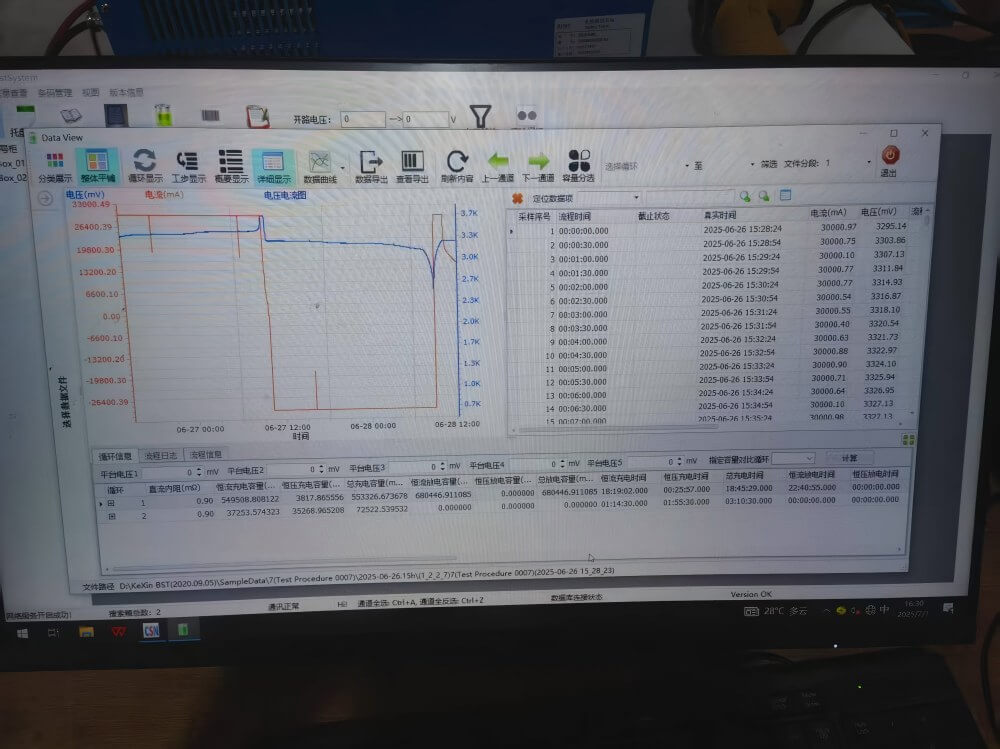
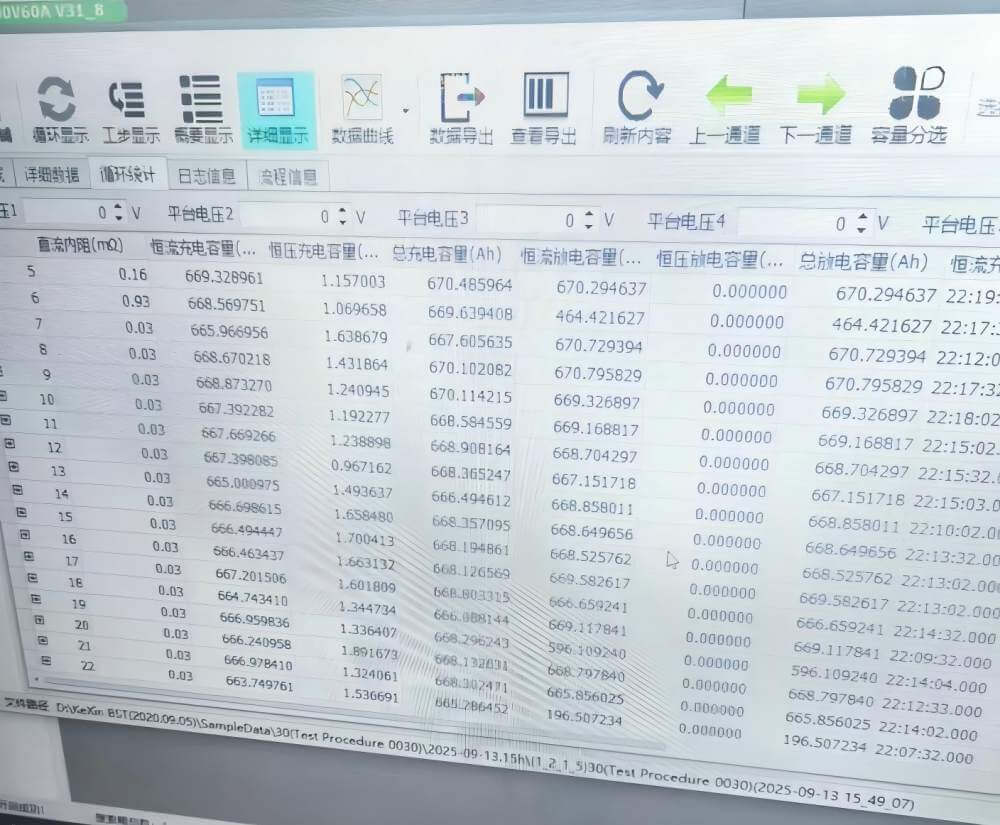
Decay Rate Calculation:
(Initial Max Capacity – Current Stable Capacity) ÷ Initial Max Capacity × 100% = (680 – 665) ÷ 680 × 100% ≈ 2.21%.
Industry standards typically require a decay rate of ≤2% over 100 cycles, or about 0.02% per cycle. While EVE’s battery shows 2.21% decay after just 22 cycles, it's worth noting that many batteries approach the 2% mark only after 100 cycles. EVE’s performance at this stage suggests stronger-than-standard longevity.
Quick note: This EVE 628Ah battery comes with a QR code. It was sourced via market channels and claimed by the supplier to be a lab-grade premium A product – though I’ll let the data speak for itself.
2. CATL 530Ah 3.2V Lithium Battery (Grade B): 27 Cycles, Decay Rate 1.30% – Surprisingly Strong!
As the only Grade B battery in the test (re-labeled by the supplier, as mentioned earlier), the CATL 530Ah has exceeded expectations. Its initial capacity test (voltage range: 2.5–3.65V) showed 537Ah, with 30A discharge lasting over 30 hours.
After 27 capacity cycles, the data are as follows:
540, 539, 539, 539, 538, 537, 333, 539, 537, 536, 536, 536, 535, 534, 534, 534, 534, 536, 535, 533, 533, 533, 459, 533, 533, 533.
Again, excluding abnormal values (333Ah, 459Ah), the maximum capacity reached 540Ah. After 27 cycles, the stable capacity is 533Ah, with only 7Ah lost.
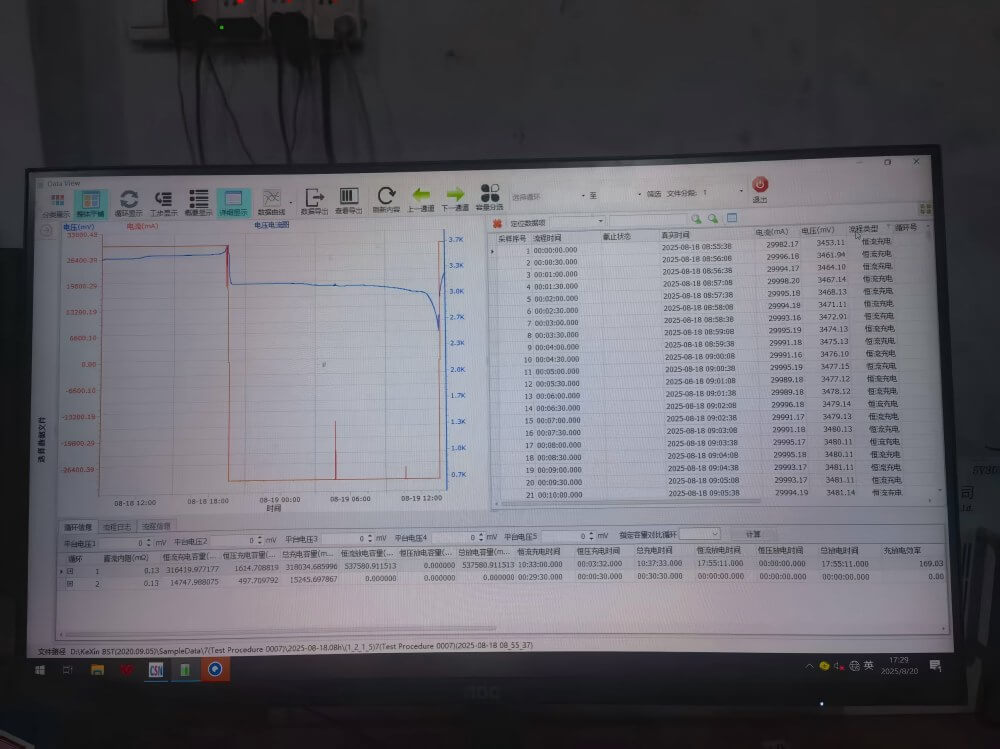
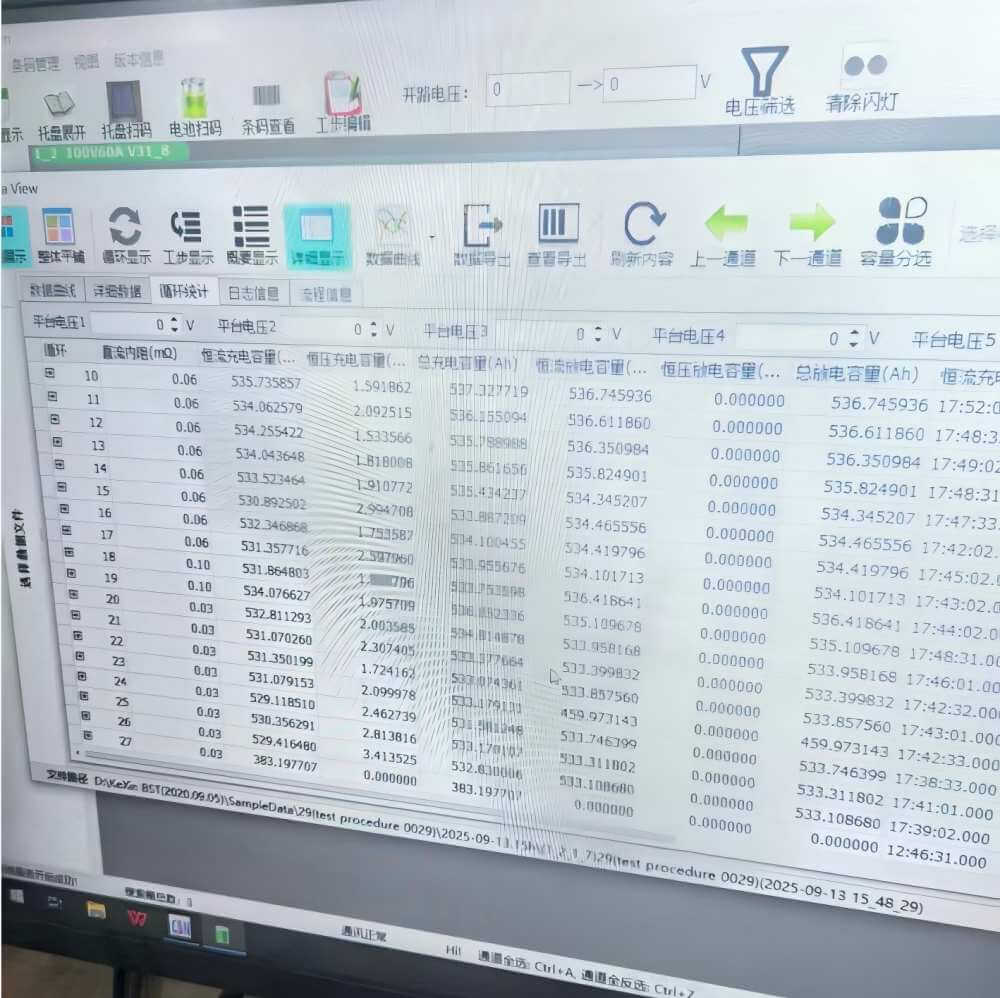
Decay Rate Calculation:
This result is remarkable, especially compared to the EVE battery (2.21% decay over 22 cycles). CATL not only completed more cycles but also showed nearly 1 percentage point lower decay. What’s more impressive – this is a Grade B cell, often associated with minor defects or parameter deviations. Yet its stability and performance are outstanding, even surpassing many Grade A products on the market.
3. Sodium-Ion Battery 200Ah 3V: 66 Cycles, Decay Rate 2.43% – The Stability Champion!
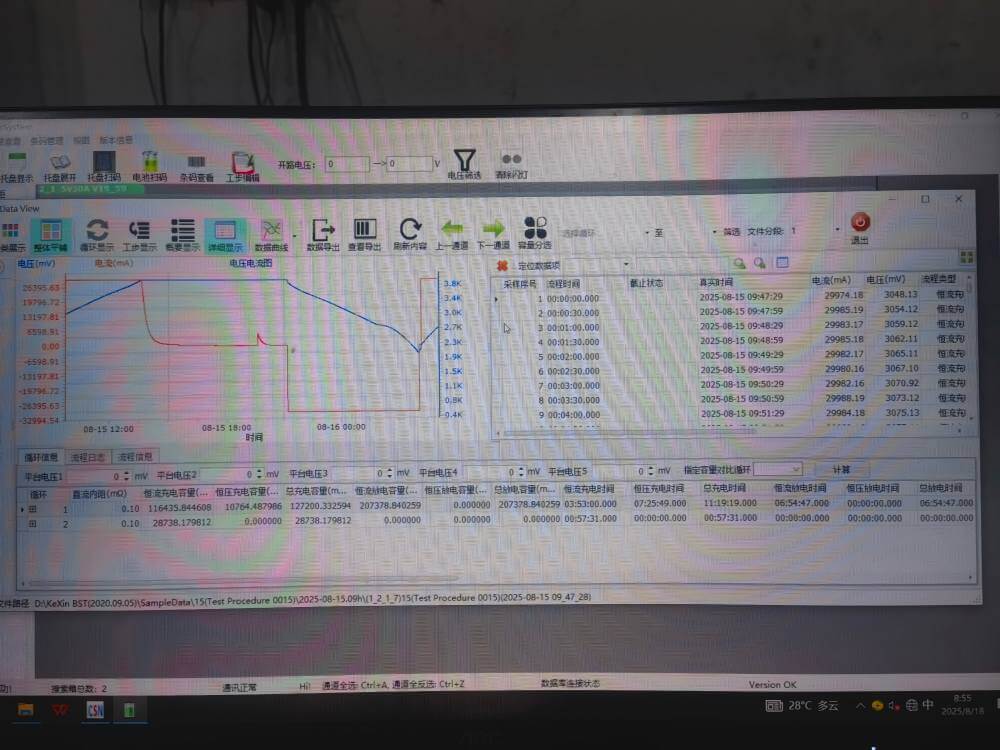
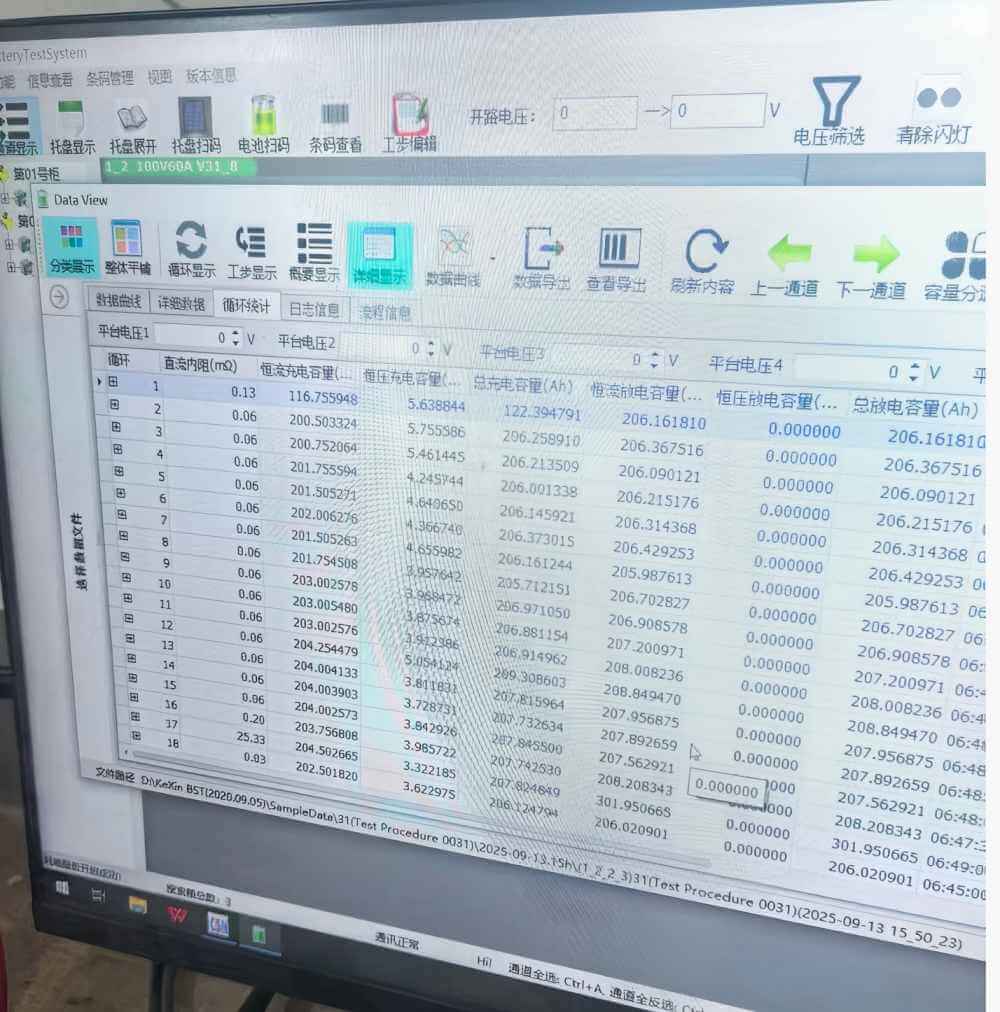
Finally, the sodium-ion battery. Initial capacity was 206Ah (voltage range: 2–3.8V, 30A discharge). Cycle data showed remarkable consistency:
206, 206, 206, 206, 206, 206, 205, 206, 206, 207, 208, 208, 207, 207, 208, 206, …, 206, 206, 204, 204, 205, 205, 204, 204, 205, 205, 205, 204, 204, 204, 203, 204, 205, 203, 204, 203.
This battery completed the most cycles among the three – 66 in total. Maximum capacity reached 208Ah, minimum was 203Ah, with total decay of 5Ah.
Decay Rate Calculation:
(Max Capacity – Min Capacity) ÷ Max Capacity × 100% = (208 – 203) ÷ 208 × 100% ≈ 2.43%.
It’s important to highlight that the sodium-ion battery’s capacity fluctuation was minimal throughout testing, and its decay curve remained nearly flat. A 2.43% decay over 66 cycles is an excellent result in long-term testing, underscoring sodium-ion’s inherent stability.
4. Core Data Summary & Conclusions
Here’s a clear summary of the key results:
EVE 628Ah: 22 cycles | 680Ah → 665Ah | 15Ah decay | ≈2.21% decay rate
CATL 530Ah (Grade B): 27 cycles | 540Ah → 533Ah | 7Ah decay | ≈1.30% decay rate
Sodium-Ion 200Ah: 66 cycles | 208Ah → 203Ah | 5Ah decay | ≈2.43% decay rate
•All three batteries showed reasonable decay rates with no abnormal performance.
•Among lithium iron phosphate batteries, CATL’s Grade B cell outperformed EVE – lower decay rate, more cycles, and excellent stability at a potentially lower cost.
•The sodium-ion battery impressed with ultra-high cycle stability. Although its decay rate is slightly higher, it completed the most cycles with minimal fluctuation – a true standout in consistency.
A quick reminder: testing continues! We’ll keep tracking long-term decay and how these batteries perform under different conditions. If you want real battery data and practical guides, don’t forget to like and follow.
WhatsApp/Wechat/Mobile: +86 13332949210
Email: info@xihobattery.com
Website: www.xihopower.com